A closet with sliding doors hides everything, but it only opens half at a time. Shoes end up in a heap on the floor, bags pile on the top shelf and the thing you need is always behind the door you did not open.
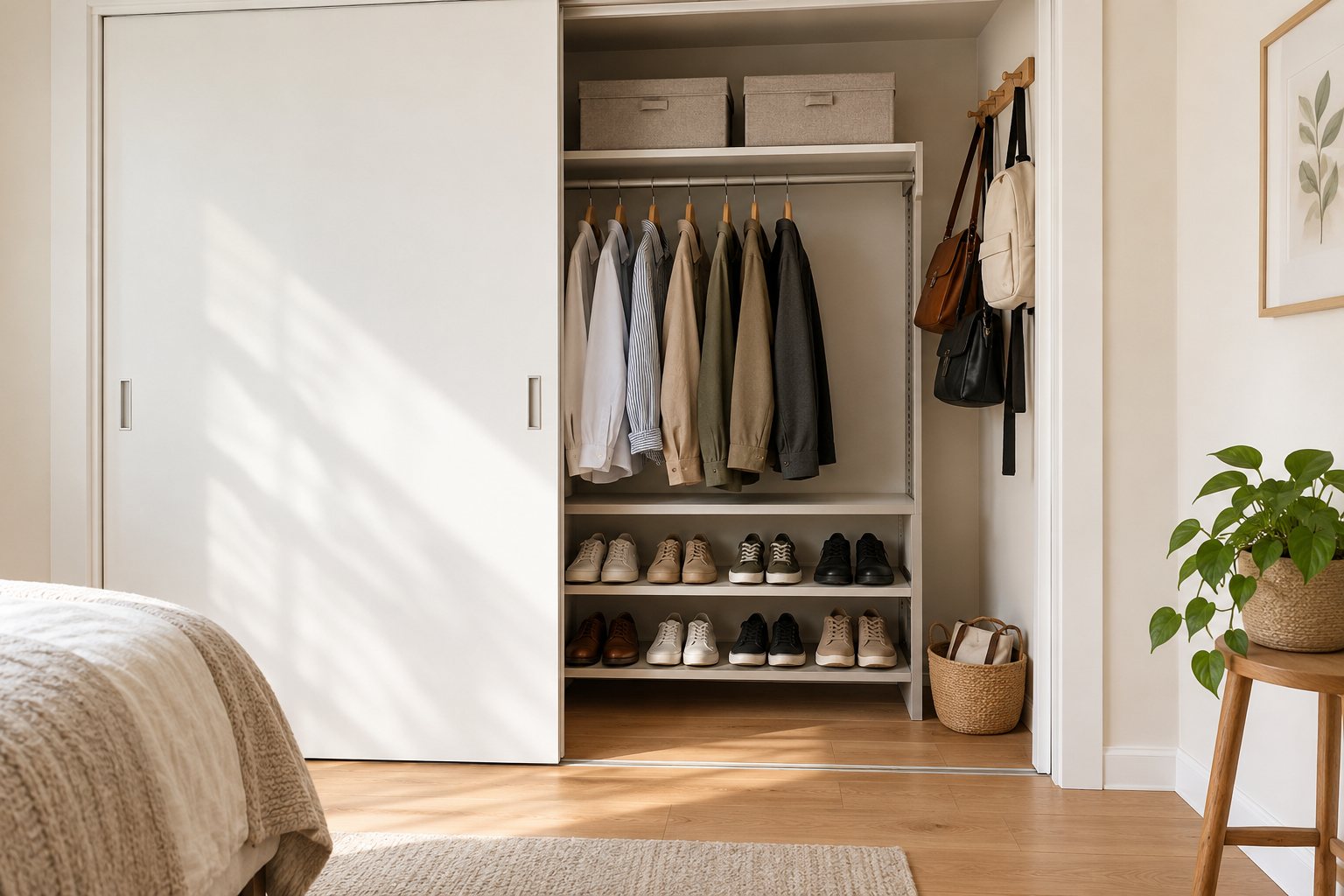
This guide builds a half-open plan around the layout in the cover photo: a two-tier shoe rack, a hanging rail, lidded boxes on the shelf above, a row of hooks on the side wall and a basket on the floor. It covers where each item goes, how to keep shoes dry and which bags can hang and which belong on a shelf. For the closet as a whole, start with Small Closet Organization Ideas: Five Measurements and Height Zones .
1. Learn Which Half You Can Reach
With two sliding doors, one panel always covers part of the opening. Slide each door all the way and measure what you can actually reach: the width of the open side, the height of the rail and the depth to the back wall. The strip behind the overlapping panels is the hardest to reach, so it is a poor place for anything you use every week.
Stand in front of the closet and note which side you open first, usually the side nearest the bed or the room door. That side is the daily half. Everything you wear weekly belongs there, and everything else goes to the other half.
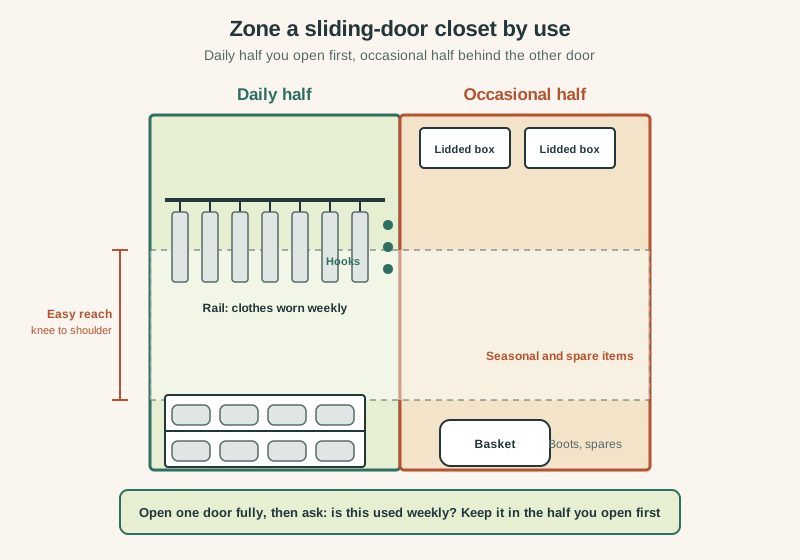
2. Zone the Closet: Daily Half, Occasional Half
Split the closet into two zones. The daily half holds the shoe rack, the rail with the clothes you wear most and the bag hooks. The occasional half holds out-of-season shoes, boxes and spare bags. Within each half, keep what you use most between knee and shoulder height, as in the diagram below, and put light, rarely used things up high and heavy things low.
The cover photo follows this idea: the rack and rail sit in the open half, the boxes sit on the shelf above and the hooks are on the side wall where a hand can reach without a step stool. If your closet is narrow you can reverse the order, but keep the daily zone on the side you open first.
3. Shoes: One Pair, One Slot
The two-tier rack in the photo holds about eight pairs, four per tier, with a hand’s width between pairs. Count the pairs you wear in a normal week, then add a few for the season. A rack that holds far more than that invites clutter.
Measure your tallest everyday shoe before you buy a rack and check that the tier height clears it. Boots and other tall shoes rarely fit a low tier, so give them a separate place on the occasional side. Store pairs together and facing the same way, so you can find a pair at a glance. Rotate sandals and boots with the season rather than keeping everything out.
4. Dry Shoes Before They Go In
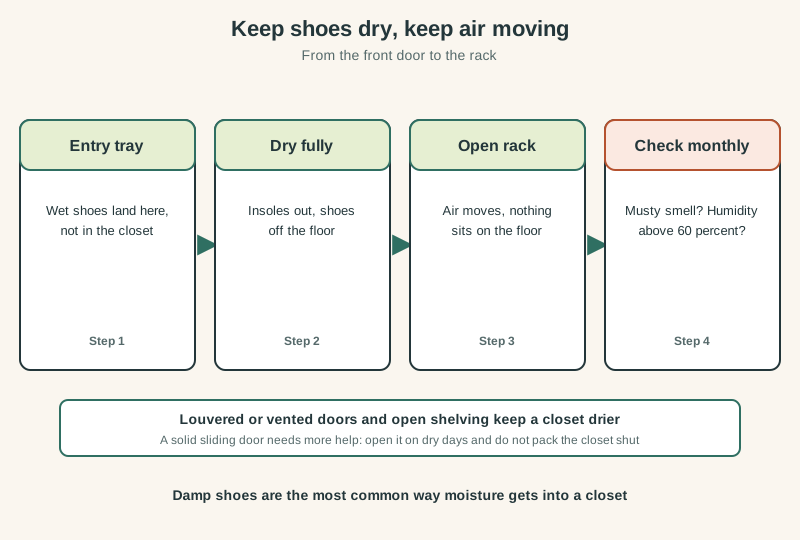
Wet shoes are a common way for moisture to enter a closet. University of Florida extension advice says that anything damp you put into a closet, even a little moisture in shoes or clothing, adds to moisture problems, and PuroClean’s closet guide says never to store damp shoes. Environix notes that mold often shows up on shoes first because they sit close to the floor, where humidity is higher.
Give wet shoes a landing place outside the closet, such as a tray by the door or a rack in the hallway, and let them dry fully before they go on the rack. Pull out the insoles if they are removable, since they hold moisture longest.
5. Let the Closet Breathe
A sliding door is usually solid, so air hardly moves. University of Florida extension advice is that louvered doors encourage air movement and keep a closet drier, and PuroClean says louvered or vented doors improve airflow. If you cannot change the doors, slide them open for a few hours on dry days and avoid packing the closet tight.
Environix says relative humidity above 60 percent can lead to mold on clothing and shoes, and suggests a humidity gauge. A small gauge is cheap and tells you when the closet needs attention. The same extension guide says open shelving, such as plastic-coated wire, allows air circulation, and that items should not sit directly on the floor, where moisture can be trapped under them. The rack in the photo is open and keeps the shoes off the floor.
6. Bags: Hooks for Sturdy Ones, Shelf for Structured Ones
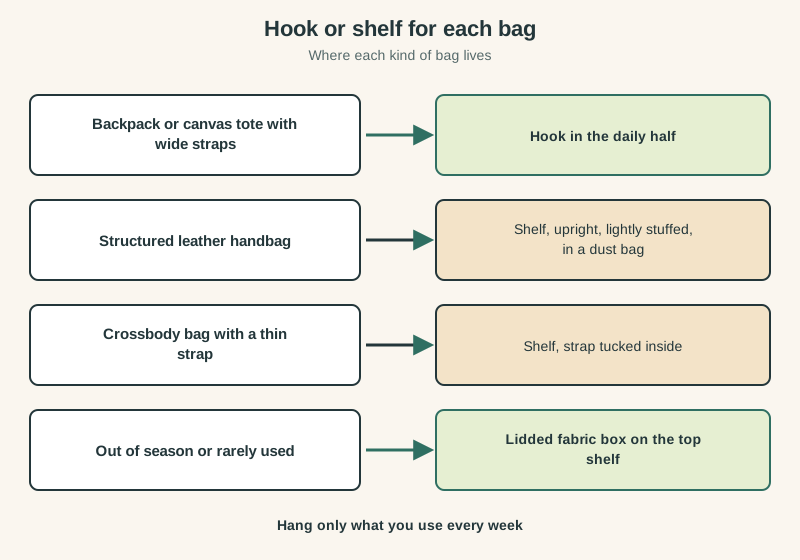
Leatherology advises storing bags upright whenever possible and avoiding long-term hanging by thin straps; it suggests shelving crossbody and shoulder bags with the straps tucked inside. Its guide also says to stuff bags with tissue or inserts to keep their shape, to use dust bags or cotton pillowcases so air can move, and to avoid stacking them.
The hooks in the cover photo suit the bags you use every week, such as a backpack or a canvas tote with wide straps. Treat the hook as the daily position, not as storage. A structured leather handbag that you carry a few times a month belongs on the shelf, upright, lightly stuffed, with the strap tucked in. If you hang a leather bag with a thin strap, take it down and rest it on a shelf every few weeks.
7. Hook Placement and Load
Mount hooks inside the open half, at a height you can reach without stretching, and leave space so bags do not press on each other. Leatherology suggests avoiding overcrowding and keeping frequently used bags within easy reach, which is the job of the hook row.
If you rent, use over-the-rail hooks or adhesive hooks and check the weight rating on the package; a backpack with a laptop can be heavy. Test a hook for a day before trusting it, and never hang a heavy bag from a hook meant for a scarf.
8. The Shelf Above: Lidded Boxes
The two lidded fabric boxes on the top shelf in the photo hold out-of-season items: spare bags, sandals or winter gloves. Fabric lets air through, unlike a sealed plastic tub. Label the end of each box that faces the room, put the lightest items in the highest boxes and keep one hand free when you lift a box down.
Stack no more than two boxes high, because a box at the back is hard to reach through a half-open door. If a box feels heavy, move it to the lower shelf or split the contents.
9. A Basket for Flat Items on the Floor
The woven basket in the photo holds a folded tote. A basket is a good home for flat, soft bags such as totes and gym bags that you reach for often but do not need to keep upright. Keep the basket dry and off any damp patch, and do not stack heavy things in it. A basket at the end of the closet also stops small bags from drifting under the rack.
10. Protect Bags From Light and Damp
Leatherology advises avoiding direct sunlight to prevent fading and keeping bags away from humidity to reduce mold risk. A closed sliding door already blocks most light, but check that the closet does not share a wall with a radiator or a bathroom that steams up. If you notice a musty smell, empty the closet, dry it and find the moisture source before putting anything back.
11. A Seasonal Swap in Twenty Minutes
Twice a year, take everything off the rack. Wipe the shoes, let them dry, stuff boots lightly and put the out-of-season pairs in a box. Rotate the bags too: the ones you have not touched in months go into dust bags on the shelf, and the ones you use now take the hook row.
Wipe the closet floor, check for damp and put things back so that the daily half holds only what you wore in the past month.
12. Common Mistakes in a Sliding-Door Closet
- Putting shoes away damp.
- Hanging every bag by its strap, including structured leather.
- Packing the closet so tightly that no air moves.
- Keeping boots on a low tier that bends the shaft.
- Storing bags in sealed plastic instead of breathable cloth.
- Installing hooks without checking the weight rating.
13. Try This Weekend
- Slide each door open, measure the reach and decide which half is daily.
- Count your weekly shoes, buy or place a rack that fits, and set up a tray for wet shoes by the door.
- Move leather bags to the shelf with tissue and dust bags, and keep one hook row for sturdy bags.
- Add a humidity gauge and check it after a rainy week.
Frequently Asked Questions
How do I organize shoes in a closet with sliding doors?
Put a two-tier rack in the half you open first, keep only the pairs you wear in a normal week there and move out-of-season pairs to the other half. Measure your tallest everyday shoe before you buy the rack.
Can I hang handbags on hooks?
Sturdy bags with wide straps, such as backpacks and canvas totes, can hang. Leatherology advises against hanging bags by thin straps long-term and suggests shelving structured and crossbody bags upright, stuffed and in dust bags.
How do I stop shoes from getting moldy in a closet?
Never put damp shoes away, let them dry fully outside the closet and keep air moving. University of Florida extension advice notes that even a little moisture in shoes adds to a closet’s moisture problems.
What humidity is a risk for shoes and clothes?
Environix says relative humidity above 60 percent can lead to mold growth on clothing and shoes. A small humidity gauge in the closet shows when it needs attention.
Should I keep bags in plastic bins?
Breathable storage is the better choice. Leatherology advises dust bags or cotton pillowcases so air can move, and avoiding stacking bags.
How many pairs fit on a two-tier rack?
It depends on the rack width and your shoe size. The rack in the cover photo holds about eight pairs, four per tier, so measure your shoes and count before you buy.
Sources
- University of Florida IFAS Extension, Moisture Control in Your Home, Part 2: Room by Room Tips .
- PuroClean, How to Prevent Mold Growth in Your Closets (archived copy) .
- Environix, Mold on Clothing and Shoes (archived copy) .
- Leatherology, How to Store Handbags: Storage Tips to Keep Bags Accessible and Protected .
Related Guides
- Small Closet Organization Ideas: Five Measurements and Height Zones
- Renter-Friendly Closet Organization With Adhesive Hooks and Tension Rods
- Linen Closet Organization Ideas: A Simple System for Small Shelves
Image Credits
The cover image is an AI-generated image via ChatGPT, October 2026. The three diagrams are original graphics created for this guide.