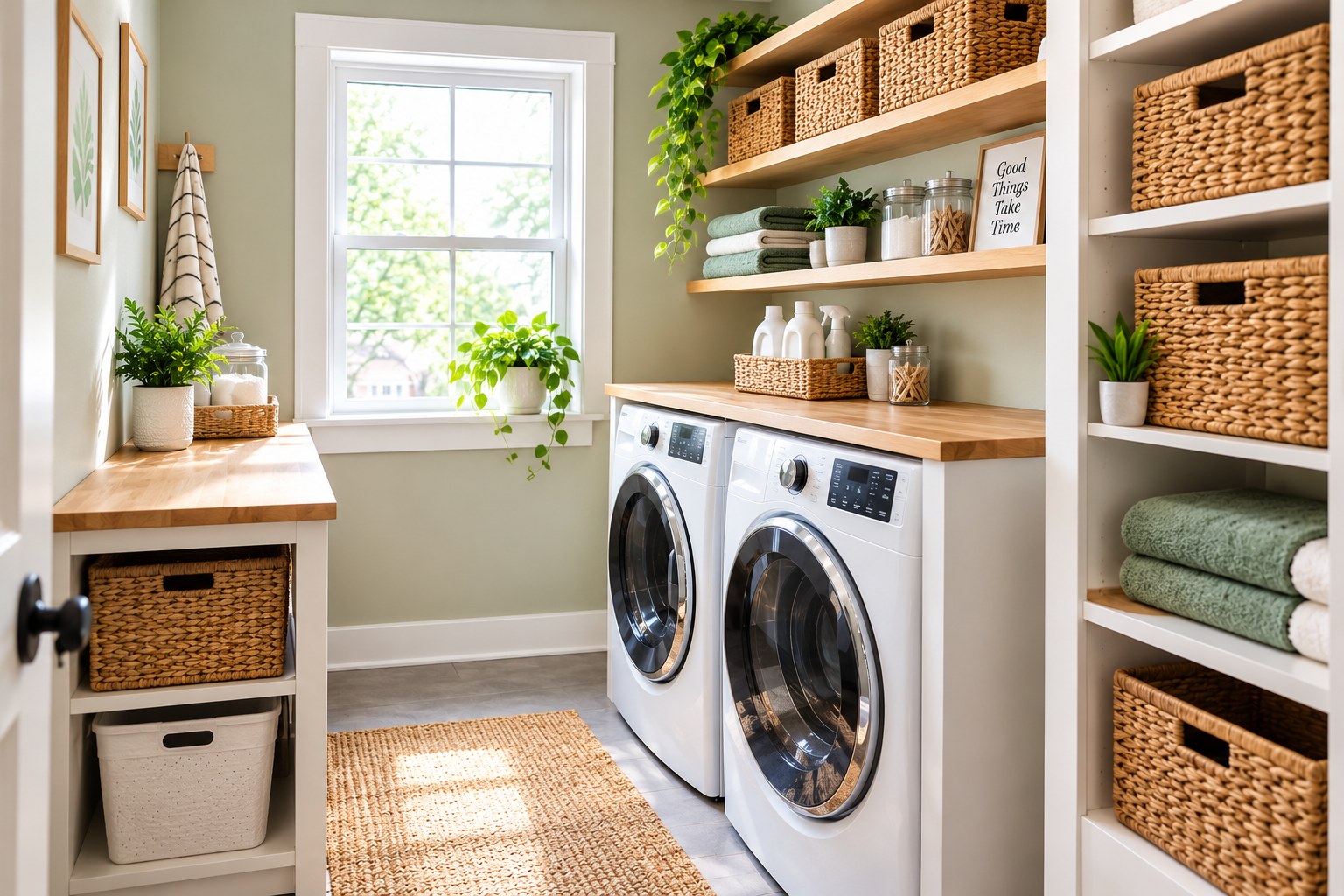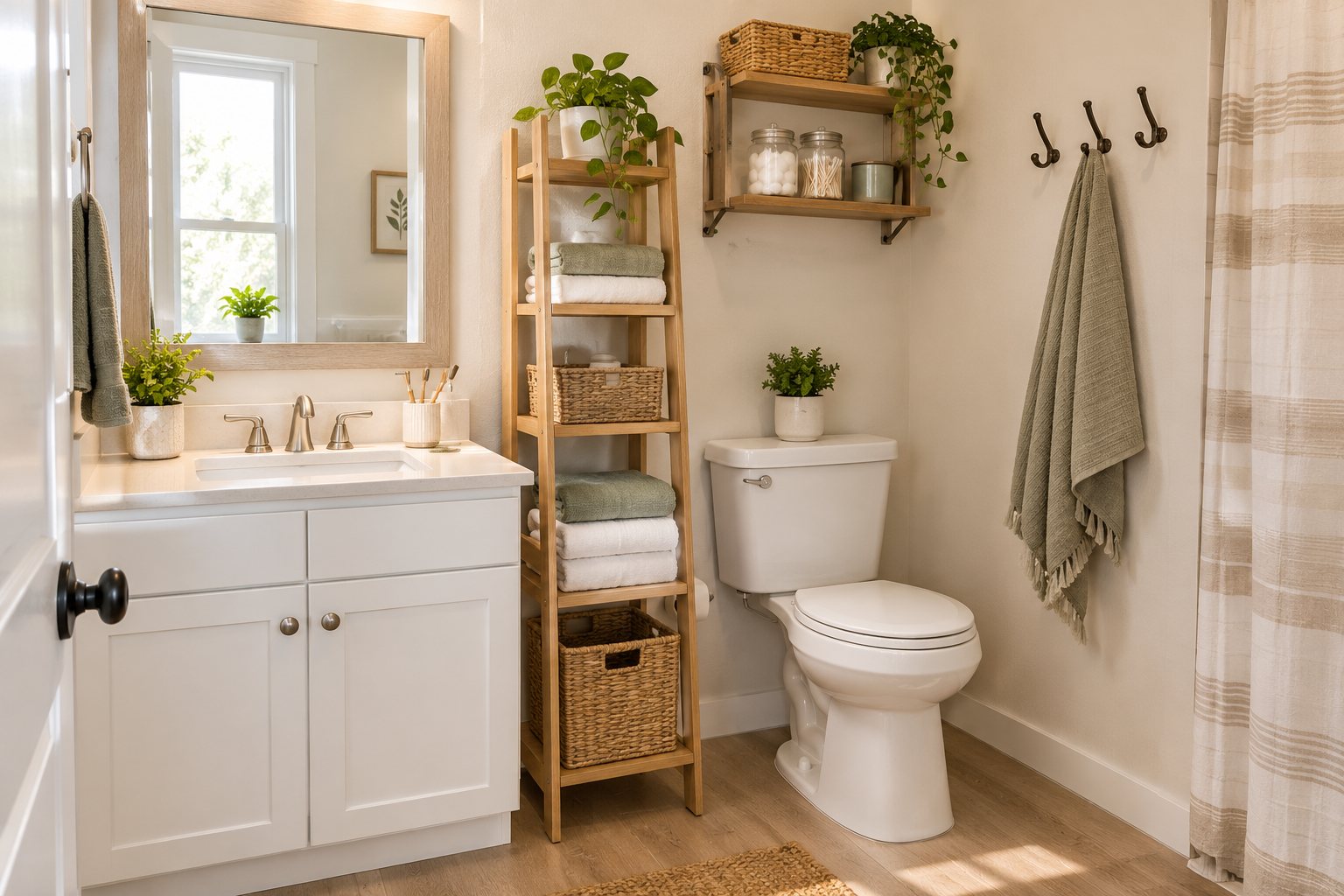
A small bathroom has to do a lot in a few square feet: it is where you start the day, handle wet towels, and store products that can spill, rust, or go stale. Most clutter comes from one mistake, which is adding containers before deciding what each part of the room is for.
This guide uses a five-spot measuring pass, four zones, and a moisture routine. It also covers toilet clearances you should not build into, and it comes with a printable zone plan .
Start With the Bathroom You Have
| Your bathroom | The main limit | Best first move |
|---|---|---|
| Powder room or half bath | No shower, tiny vanity | Wall storage above the toilet and a one-tray counter |
| Tub or shower with a vanity | Moisture and a shared counter | Door-back and wall storage, plus a fan routine |
| Shared family bath | Many people, many products | One labeled bin or drawer per person |
| Rental with no drilling | You cannot add fixed shelves | Adhesive hooks, over-door racks, and tension poles |
Measure Five Spots First
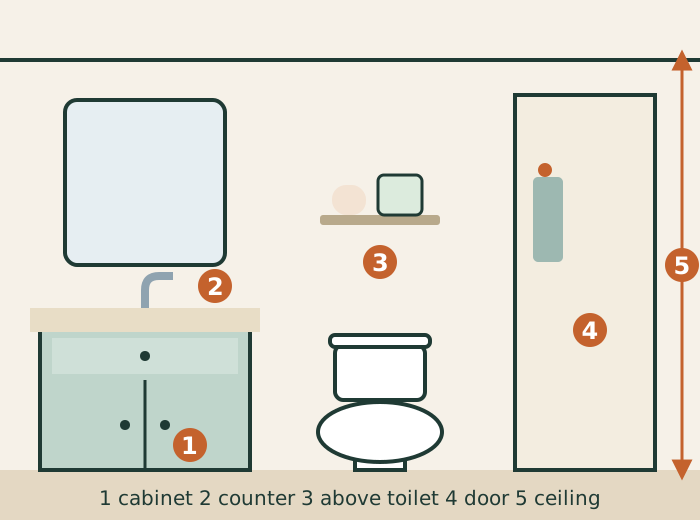
Write down these five measurements before you buy anything:
- Cabinet interior: width, depth, and the height below the sink, with the pipes marked.
- Counter: how much surface is actually free once the faucet and sink are accounted for.
- Wall above the toilet: width, and the height from the tank lid to the ceiling.
- Back of the door: the height and the clear width, plus whether the door still closes.
- Ceiling height: this decides how many tiers of wall storage you can use.
Cardboard is the cheapest test. Cut a piece to the size of the shelf or rack you are considering, tape it up, and live with it for a day.
Keep the Toilet Clearances Free
Storage should never cut into the space around the toilet. Building codes commonly ask for about 15 inches from the toilet’s center to the nearest side wall or fixture, and about 21 inches of clear space in front. Local rules can differ, so check yours.
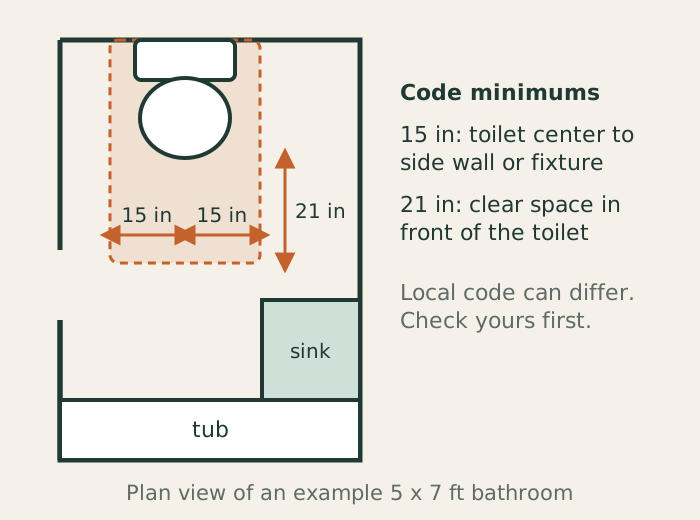
That dashed area is not storage space, even though it looks empty. Place a shelf or cabinet above or beside it instead.
Build Four Zones
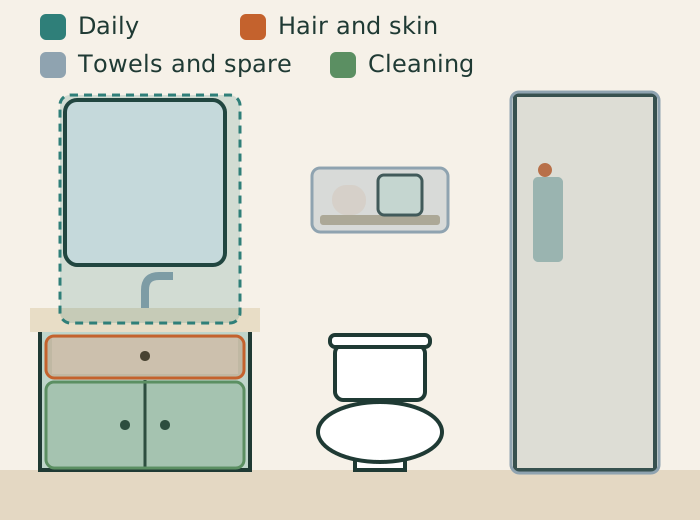
- Daily zone: the mirror and a single tray on the counter. Soap, toothbrush cup, and one skincare item.
- Hair and skin zone: the top drawer, with dividers. One drawer, one job.
- Towels and spare zone: the shelf above the toilet and the back of the door. Keep one towel per person in use and one spare.
- Cleaning zone: the lower part of the cabinet. For layout details see the under-sink organization guide .
When a product has no zone, it probably does not belong in the bathroom.
Give the Counter and Drawers a Capacity Limit
Clutter returns when nothing limits it. Set a limit for each surface:
- Counter: one tray, sized to the free area you measured. If a new item does not fit on the tray, something leaves.
- Drawers: measure the inside, then use dividers or small bins so every item stands upright and visible. Fill a drawer about three-quarters full so things can be pulled out without digging.
- Mirror cabinet: the front row holds what you use daily; backups go in the cleaning or spare zone.
For example, a counter with 20 inches free beside the faucet can hold a tray about 10 inches wide with room left for hands. The exact numbers will differ in your bathroom, but the rule is the same: the container sets the limit, not the other way around.
Put Things at the Right Height
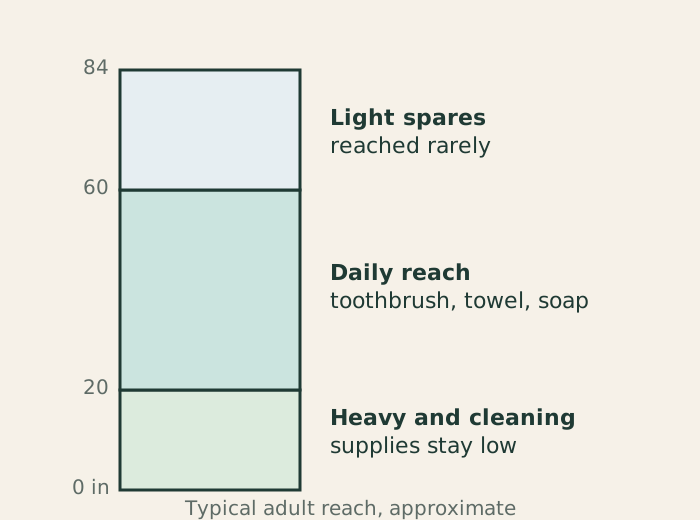
Easy reach for most adults sits roughly between knee and shoulder height. Keep daily items there. Put heavy bottles and cleaning supplies low, and light spares such as extra toilet paper or a spare towel up high. Heights vary with the person, so adjust for your household.
Use Walls and Doors Without Overloading Them
- Over-the-toilet shelf or cabinet: leave enough room above the tank to lift the lid for repairs.
- Over-door rack or hooks: confirm the door still closes and does not hit the frame or the wall.
- Adhesive hooks: check the weight rating and clean the surface first. Bathroom steam can weaken some adhesives, so recheck them over time.
- Tension poles: useful in the shower corner, but they need a solid floor and ceiling and must stay within their weight limit.
- Suction caddies: steam and wet tile can make them let go, so prefer tension or rated adhesive.
Choose rust-resistant materials such as plastic, coated metal, or stainless steel. Avoid cardboard and untreated wood in a damp room.
Control Moisture, Towels, and the Shower
Moisture is what turns a tidy bathroom musty. Make the routine automatic.
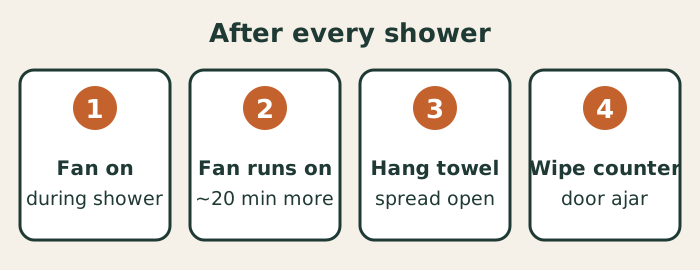
Running the fan during the shower and for about 20 minutes afterward is a commonly recommended habit. Hang towels spread open rather than bunched on a hook, and keep stored items off the shower floor.
- Shower storage: give each person one shelf or one caddy space. Finish a bottle before you add another, and keep shower items off the floor so the base can dry.
- Towels: hang towels spread open, and store spares flat. Stack them only as high as you can lift one without disturbing the rest, and fold them to the depth of the shelf so nothing hangs over the edge.
- Bath mat and rugs: hang or spread them to dry after use, because a damp mat on the floor is a common source of musty smells.
Store Medicines and Cleaners Safely
Keep products in their original, labeled containers and out of children’s reach, with a child-safety latch if needed. Never store bleach next to ammonia-based or acidic cleaners, since mixing them can release toxic gas. A small basket with a toilet brush, one all-purpose cleaner, and a cloth is enough for most small bathrooms.
Heat and humidity can affect some medicines, so a cool, dry place such as a high bedroom shelf often suits them better than the bathroom. Check the label, keep every medicine out of children’s reach, and use a drug take-back program for expired ones. If a child swallows something, call Poison Help in the US at 1-800-222-1222. In the UK, call NHS 111, or 999 in an emergency.
Set a Two-Minute Reset
Once a week, clear the tray, return strays to their zones, wipe the counter, hang the towels, and glance at the cabinet floor for moisture.
You have enough storage when:
- every daily item has an obvious home;
- the counter can be wiped without moving more than one tray;
- the toilet clearances are clear;
- the door closes freely;
- towels dry fully between uses.
If you keep wanting another organizer, edit your products before you add storage.
Frequently Asked Questions
How can I organize a very small bathroom without crowding it?
Keep only daily items on the counter, give each drawer one job, and use the wall above the toilet and the back of the door for storage. Leave the clear floor space in front of the toilet untouched.
What should stay on a small bathroom counter?
Only what you use every day, on one tray: soap, toothbrush cup, and maybe one skincare item. Everything else goes in a drawer or cabinet so the counter can be wiped in seconds.
How do I add storage above the toilet without blocking it?
Mount a shelf or narrow cabinet high enough that you can still lift the tank lid, and keep the front of the toilet clear. Use rated hooks or anchors, and check the weight limit of whatever you hang.
Where should medicines be stored?
Heat and humidity can affect some medicines, so a cool, dry spot such as a high bedroom shelf is often better than the bathroom. Keep all medicines out of children’s reach and follow the label.
How do I stop towels and storage from getting musty?
Run the fan during the shower and for about 20 minutes afterward, hang towels spread open, and avoid cardboard or untreated wood. Keep items off the shower floor and wipe damp shelves.
How do I organize a rental bathroom without drilling?
Use rated adhesive hooks, an over-door rack, a tension pole, and freestanding units. Follow the product’s weight limit and let adhesive cure as the label directs.
Sources
- International Code Council, International Residential Code (IRC), Sections R307 and P2705.1: toilet clearances of about 15 in from the center to a side wall and 21 in in front. Local codes may require more.
- Home Ventilating Institute (HVI): run the bathroom fan about 20 minutes after bathing.
- Poison Help (HRSA), poisonhelp.hrsa.gov : US helpline 1-800-222-1222
Related Guides
- Under-Sink Organization Ideas: A Measured, Leak-Aware System
- Linen Closet Organization Ideas: A Simple System for Small Shelves
- Small Apartment Organization: Maximizing Storage in 350 Sq Ft
- Renter-Friendly Closet Organization Using Adhesive Storage
The diagrams in this guide are original illustrations drawn for this article.