Quick answer: keep a clear walking path of about 36 inches, put a low console with closed storage under the TV and anchor it, use one wall shelf above it for light items, let the coffee table hold a single basket, and run every cord to one uncovered power strip. Most other things belong in another room.
Why Small Living Rooms Fill Up So Fast
A living room is the one room that does everything. It is where you sit, work on a laptop, eat a quick meal, play games, hold the mail you have not opened yet, and drop the things you carried in. When there is no obvious destination for each of those items, they settle on the sofa arm, the coffee table and the floor.
In a rental the problem has a second layer. You may not be able to drill into the wall, replace a built-in shelf or move the outlets. That makes it tempting to buy more furniture, which usually makes a small room feel smaller. This guide takes the opposite route: fix the layout first, then add the least storage that handles what really lands in the room.
Start With Zones, Not Furniture
Before you buy anything, name the jobs the room has to do. For most households there are four: watching or relaxing, quick storage for daily items, a surface for drinks and devices, and a place for things that belong to other rooms but wander in.
Give each job one zone. The TV wall handles screens and media. The coffee table handles drinks and the current book. One basket handles throws and remotes. Anything that does not fit a zone is a signal to move it, not to buy another container.
If you need more capacity elsewhere in the home, our small apartment storage guide shows how to find it in other rooms before adding more to the living area.
Measure the Walking Path Before You Buy Storage
Take a tape measure and record the room width, the wall length, the distance from the door to the first piece of furniture, and the swing of any door that opens into the room. Then draw the route you actually walk: from the entrance to the window, the kitchen or the hallway.
A useful planning target is a clear path of about 36 inches. That number comes from the ADA Standards, which set 36 inches as the minimum clear width of an accessible walking surface. A private rental does not have to meet that standard, but it is a sensible benchmark: if a console or bookcase leaves less than that, you will turn sideways every time you pass it.
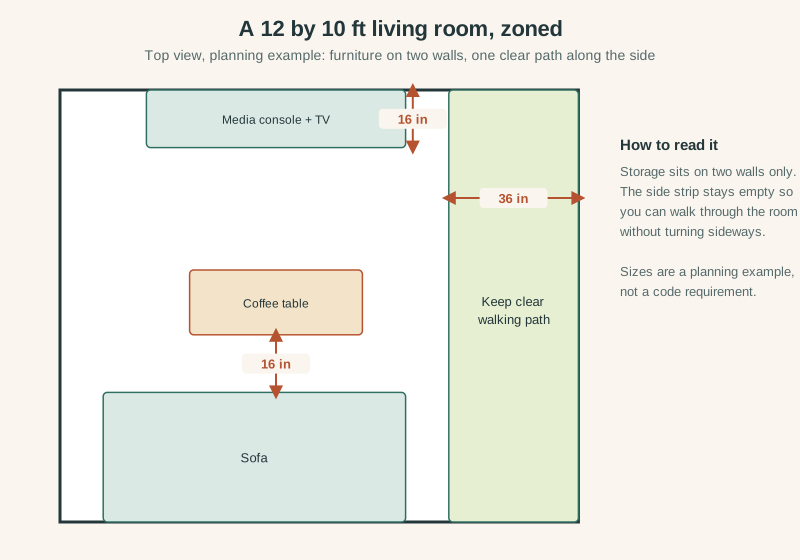
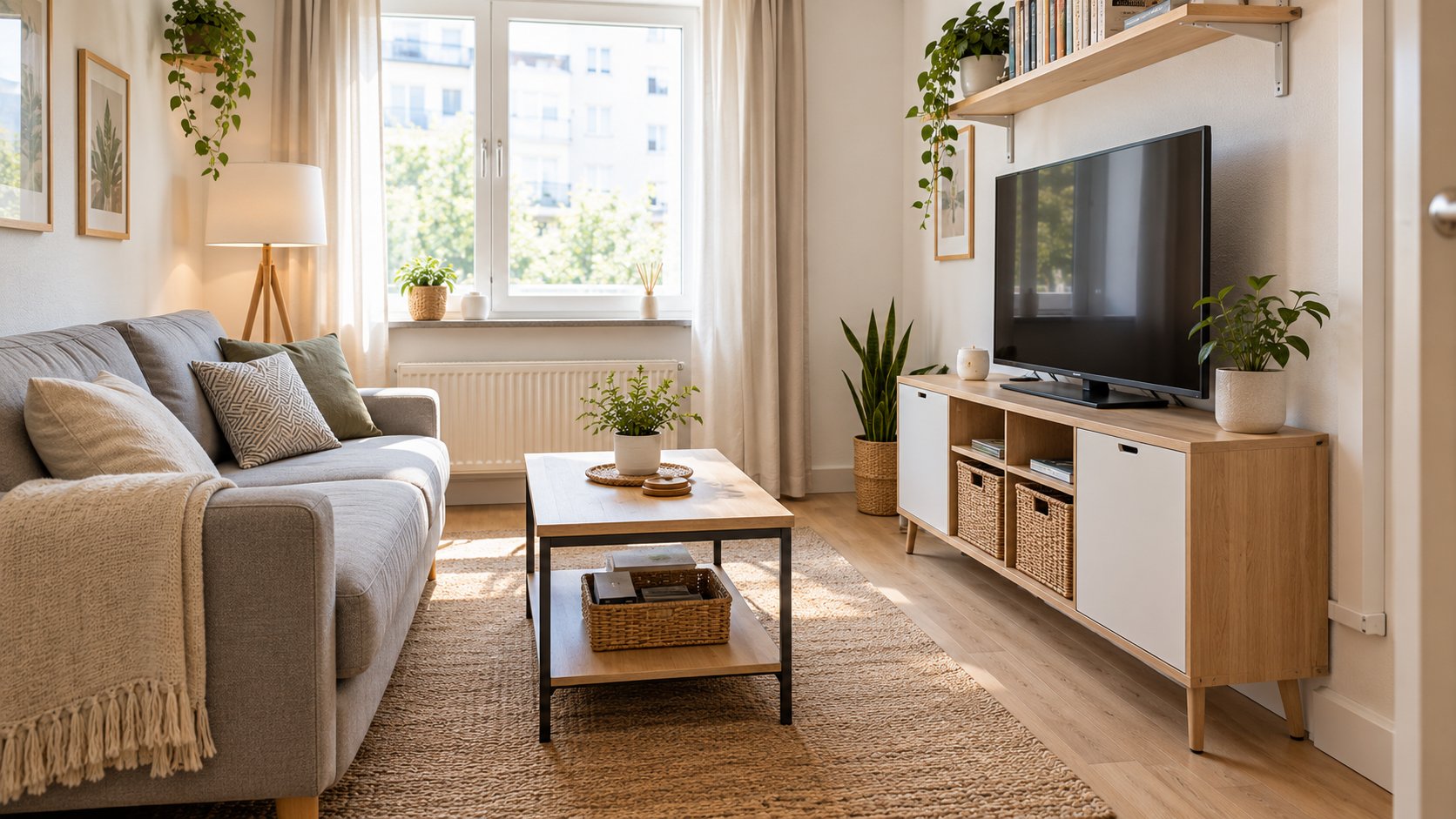
In the example above, the console is only 16 inches deep, the sofa sits against the opposite wall, and the 36-inch strip along the side stays empty. The sizes are a planning example, not a code requirement; your room will differ. The principle holds anyway: place storage on two walls at most and keep the route between them free.
Also keep the way to the door clear. A path that is blocked by a basket at night is a safety problem, not only a tidiness problem.
Choose a Low Console With Closed Storage
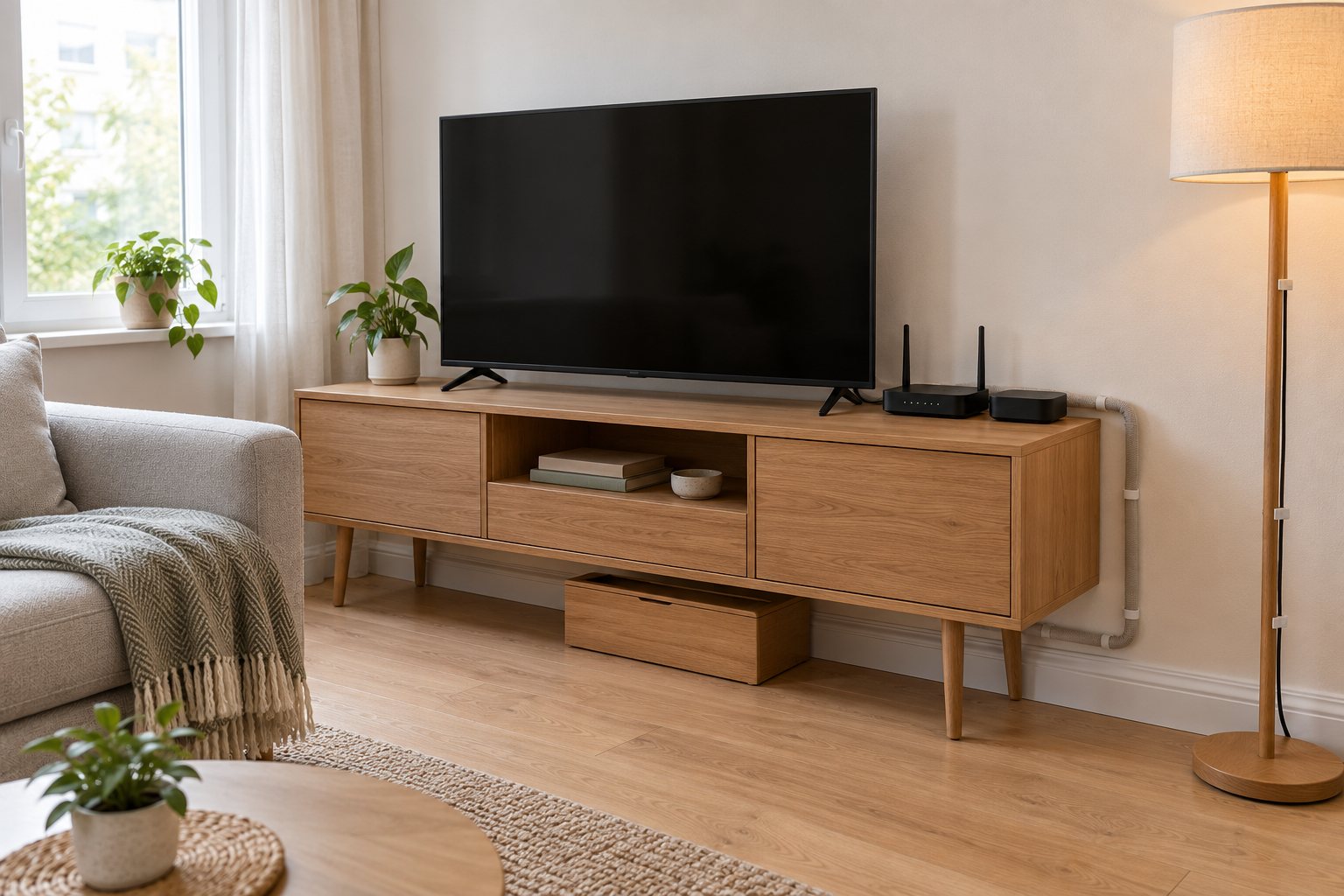
A low media console does three jobs at once: it holds the TV at a sensible height, it hides the clutter that comes with a TV, and its top gives you a surface for one lamp or plant. Prefer a console with doors or fabric bins over open shelves, because closed storage hides mixed items and keeps the wall visually calm.
Choose depth carefully. A console that is 12 to 16 inches deep usually leaves enough room in a small space; a deeper unit eats the path you just protected. Measure the console against the walking path, not against the empty wall.
Sort what goes inside by frequency. Game controllers, chargers and remotes can live in an easy bin near the front. Cables, spare batteries and instruction booklets belong at the back or in another room entirely.
Anchor the TV and Tall Furniture
This is the one step in the guide that is about safety rather than looks. The U.S. Consumer Product Safety Commission runs the Anchor It! campaign because unsecured TVs and furniture can tip over and seriously injure children. Its guidance is to anchor TVs and furniture such as bookcases and dressers securely to the wall, and, where anchoring is not possible, to put the TV on a sturdy, low base and push it back as far as possible.
For renters, the practical route is to ask your landlord what is allowed. Anchor kits use small fasteners, and some landlords permit them if you agree to repair the holes when you leave. Ask in writing so there is no confusion later. If anchoring truly is not possible, follow the low-and-back rule and avoid tall, narrow furniture altogether.
The same guidance says to keep TV and cable cords out of children’s reach. That fits naturally into a living-room system: heavy and bulky items go low, the things you use every day sit in the middle, and anything light and occasional goes high.
Use the Wall Above the Console
When the floor is crowded, the wall above the console is the best remaining surface. One shallow shelf is enough: it can hold books, a plant and a small box for things you do not use daily. A second shelf usually turns into a dust shelf.
Think in height bands. The ADA Standards give 15 to 48 inches as the unobstructed reach range for operable parts, which makes a handy band for the things you reach for every day. Heavy or bulky items go below it, in the console. Light, occasional items go above it, on the shelf.
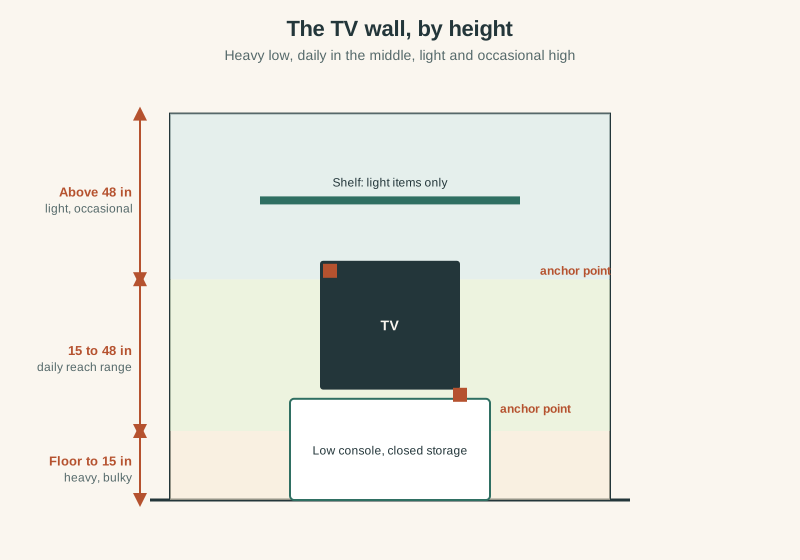
The anchor points in the diagram show where the TV and the console connect to the wall. The exact hardware depends on the product and the wall type, so follow the manufacturer’s instructions.
If you rent, check what your lease allows before you mount a shelf. Adhesive systems and removable hooks can reduce permanent changes, but every product has its own weight limit and surface requirements, so read the label and stay well under it. For more removable options, see our guide to renter-friendly closet organization .
Make the Coffee Table Do Two Jobs
A coffee table with a lower shelf or a storage compartment gives you a hidden home for what you use in the evening: coasters, a game, a notebook, the remote that always disappears. Put one basket on the lower shelf and set a rule that it holds one category.
Keep the top almost bare. A tray with a candle and one book looks tidy and also gives you a quick place to put a cup. If the top is full again within a day, the system is telling you something: either an item has no home or the basket is too small.
Where the room is very tight, consider a nesting set of two small tables instead of one large one. They can be pulled apart for guests and tucked together to keep the walking path clear.
Control Cords Without Creating a Hazard
Cords are the most visible clutter in a living room and the one area where tidy can become unsafe. Hiding a cord is not worth creating a fire or trip hazard.
Plug the TV, console and chargers into a single power strip placed behind or beside the console where it can breathe. Follow the basic rules that electrical safety guidance repeats: never plug one power strip into another, never run cords under rugs or furniture, keep strips uncovered so air can circulate, and unplug a strip that feels hot. If you need more outlets than one strip can handle, the answer is to move some devices to another outlet, not to chain strips together.
For a neat look in a rental, use cable clips, adhesive-backed cord channels or sleeves that you can remove without damaging the wall, and group cords with loose ties rather than tight bundles. Leave a little slack so plugs are not under tension.
Give Remotes, Throws and Games a Home
Small items cause the most mess because they have no obvious address. Give each category one container, and make the container easy to use: a lidless basket near the sofa for throws, a shallow tray for remotes, a lidded bin for games.
Choose containers that look good out in the room. If the basket is attractive, you will leave it where you can reach it; if it is ugly, it will end up in a closet and the items will go back to the sofa. Two or three matching baskets also make the room look deliberate, which is a quiet form of storage in itself.
Limit each container. When the basket is full, the next step is to edit what is inside, not to buy another one.
Keep Daily Storage Separate From Reserve Storage
A living room fills up when it is also the overflow room for the rest of the home. Ask of each item: “Do I use this in this room this week?” If not, it belongs in a closet, bedroom or utility area.
Seasonal items, extra blankets, board games you play twice a year and old media rarely need prime living-room space. Our bedroom storage ideas can help you find a secondary home for them, and our entryway guide covers the shoes, bags and mail that tend to wander in from the front door.
Reset in About Ten Minutes
A system lasts only if the upkeep is small enough to repeat. Try a ten-minute loop at the end of the day: three minutes to collect loose items into one basket, four minutes to return each item to its home, and three minutes to wipe surfaces, fold the throw and check the cords.
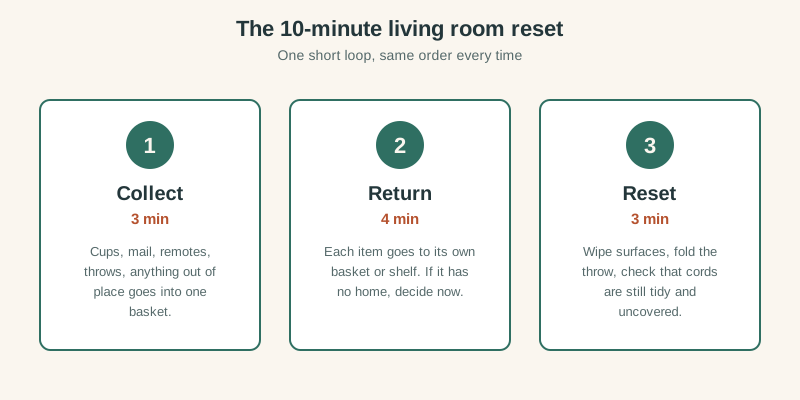
You do not need a fixed time. Choose the moment that already exists in your routine, such as after dinner or before you turn off the TV. The aim is not perfection; it is to stop a five-minute mess from becoming a weekend project.
When Clutter Comes Back, Change the System
If the same item keeps ending up on the sofa arm, do not simply put it away again. Ask why the system failed. Maybe the basket is too far from where you sit. Maybe the item belongs in another room. Maybe the console is too small for the number of devices you own.
Repeated clutter is information. Move the container closer, shrink the collection, or give the item a new home. Watch for three or four days before you buy anything new, because the pattern usually shows you the cheapest fix.
Keep the Room Small, Clear and Honest
The best small living room is not the one with the most storage. It is the one whose storage matches how you really live in it. Measure the path, anchor what is tall, keep daily items within easy reach, hide cords safely and keep a short reset habit.
If you can walk through the room without turning sideways, put everything down in the right place without thinking, and see a clear surface by the end of the evening, the system is working. If not, adjust one thing at a time.
Frequently Asked Questions
How do I organize a small living room with very little storage?
Start with the layout: keep a clear walking path, put closed storage under the TV, use one wall shelf for light items, and let the coffee table hold a basket. Add storage only after the path and the daily items are sorted.
Should I anchor the TV and bookcases if I rent?
Yes where you can. The U.S. Consumer Product Safety Commission recommends anchoring TVs and furniture such as bookcases and dressers to the wall. Ask your landlord in writing what is allowed; if anchoring is not possible, use a sturdy, low base and push the TV back as far as it will go.
How can I hide TV and charging cords in a rental?
Group cords behind the console, use clips or sleeves that do not damage the wall, and plug into one power strip that stays uncovered. Never run cords under a rug and never plug one power strip into another.
How much walking space does a living room need?
Aim for a clear path of about 36 inches along the main route through the room. That figure comes from the ADA clear-width standard for walking surfaces and works well as a planning target, though a private home does not have to meet it.
What storage works best under a coffee table?
A single low basket or a lower shelf with one container for remotes, coasters and games. Keep it to one container so the space does not turn into a second closet.
How often should I reset a small living room?
A ten-minute reset once a day is enough for most households: collect, return items to their homes, then straighten surfaces and cords.
Related Small-Space Guides
For more ways to find capacity in a small home, see our guides to decluttering small homes , small apartment storage and the narrow entryway .
Sources
- Access Board: ADA Standards, Chapter 4 Accessible Routes : the 36 inch minimum clear width of walking surfaces, used here as a planning benchmark.
- Access Board: ADA Standards guide, Chapter 3 Operable Parts : the 15 to 48 inch unobstructed reach range.
- OrthoAtlanta: Anchor It! Toppling TVs, Furniture Can Injure and Kill Kids : a health-news summary of the U.S. Consumer Product Safety Commission’s Anchor It! tips: anchor TVs and furniture to the wall, use a sturdy low base and push the TV back, and keep cords out of children’s reach. The campaign itself is at anchorit.gov.
- MidAmerican Energy: Power strip safety tips : not plugging a power strip into another, not running cords under rugs, keeping strips uncovered and unplugging one that feels hot.
The diagrams are original illustrations made for this guide; the room dimensions are a planning example, not a code requirement. Adhesive products and mounting hardware vary, so always follow the manufacturer’s weight limits and your lease.
Image Credits
- Cover: AI-generated image via ChatGPT, October 2026.