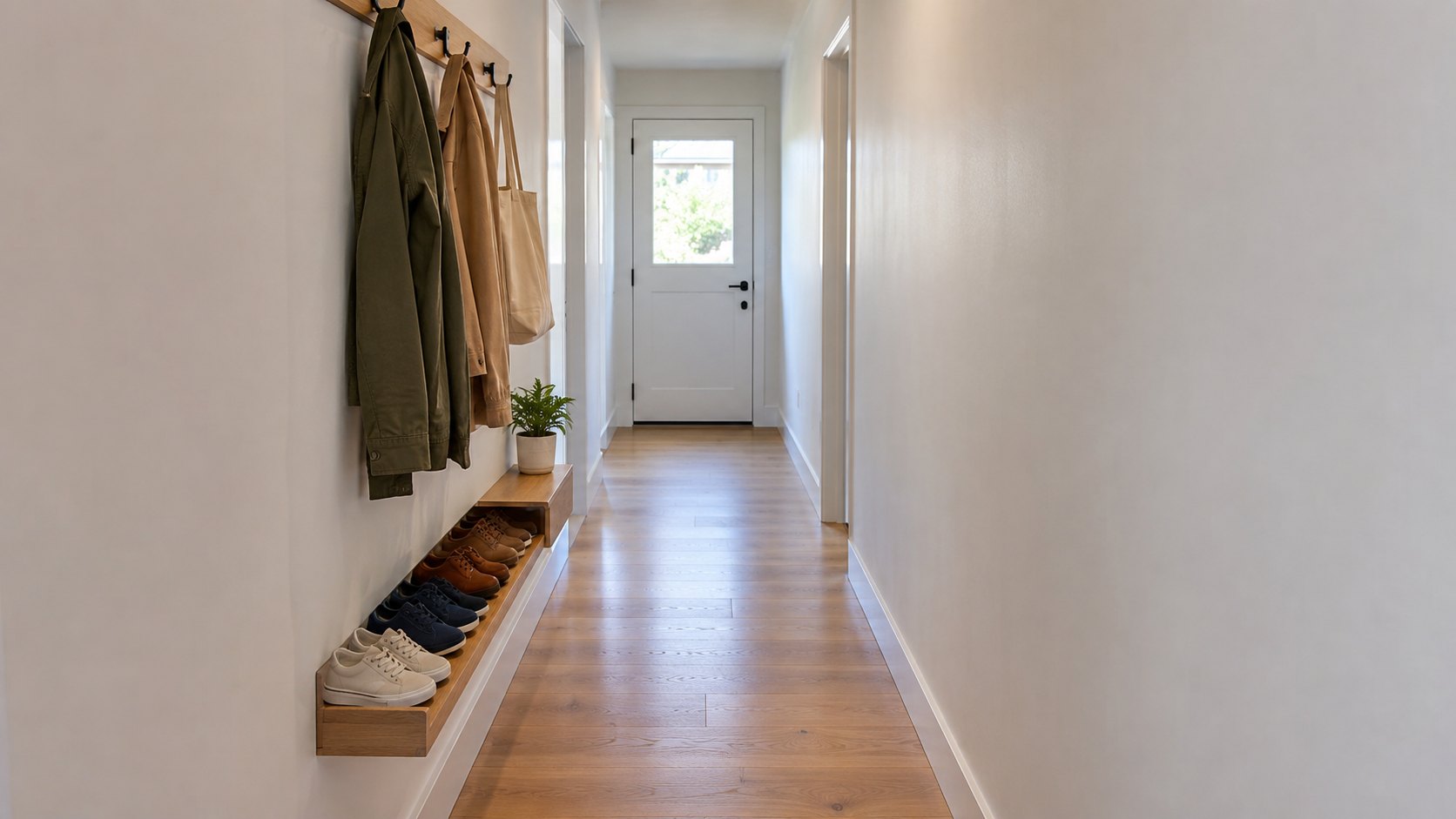
Quick answer: protect a clear walking path of at least 36 inches, put storage in a strip about 12 inches deep along one wall, give shoes one boundary, and keep a single tray for keys and mail. Everything else belongs in another room.
Why Narrow Entryways Become Cluttered So Quickly
A narrow entryway has a difficult job: it is both a passage and a landing place. The moment you walk through the door, you need somewhere to put keys, shoes, bags, mail, jackets, and the small things you were carrying. If there is no clear destination for those items, they naturally collect on the nearest surface or floor.
The solution is not to squeeze more furniture into the hallway. It is to give the entrance a simple system that matches the way you actually use it.
The goal of this guide is straightforward: create a small drop zone, move storage upward, define the shoe footprint, and make the reset easy enough to repeat every day.
Measure the Passage Before Buying Storage
Start with a tape measure. Record the usable width of the passage, the available wall width, the distance from the door to the first obstacle, and the height you can safely use.
Do not measure only the empty wall. Check door swings, handles, baseboards, switches, radiators, and any furniture that already occupies the route.
For a narrow hallway, preserving a comfortable walking path matters more than maximizing storage volume. If a cabinet makes you turn sideways every time someone walks past, it is probably too large for the job.
A useful target is the 36-inch minimum that the National Kitchen & Bath Association recommends for a walkway: if storage leaves less than that between the wall zone and the opposite wall, it is too deep. In a 48-inch-wide entry that leaves a strip of about 12 inches for hooks, a shallow shelf and a shoe tray. Also keep the route to the door free, since NFPA advises planning two ways out of every room.
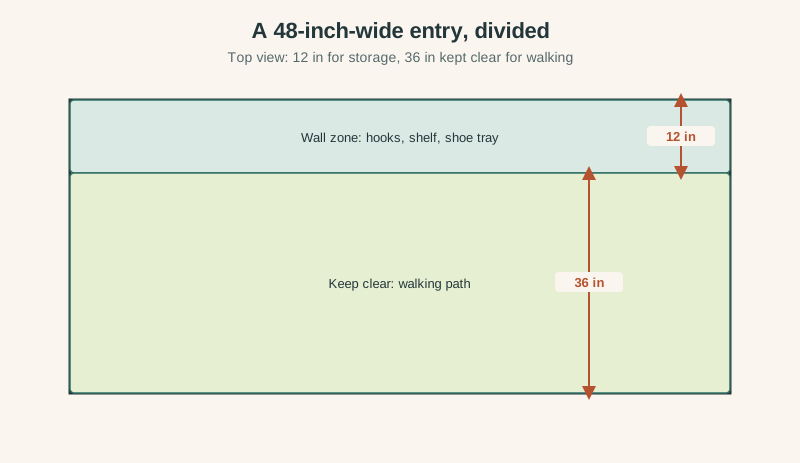
Write the measurements down before shopping. This single step prevents one of the most common organization mistakes: buying a storage product first and trying to make the room fit it afterward.
Create One Small Drop Zone for Daily Items
Your entryway does not need to hold everything. It needs to handle the things that repeatedly arrive with you.
Think of the drop zone as a landing station with three simple stages:
- Drop: keys, bag, wallet, or other daily items.
- Sort: mail, returns, recycling, or anything that needs a decision.
- Reset: put each item in its permanent home.
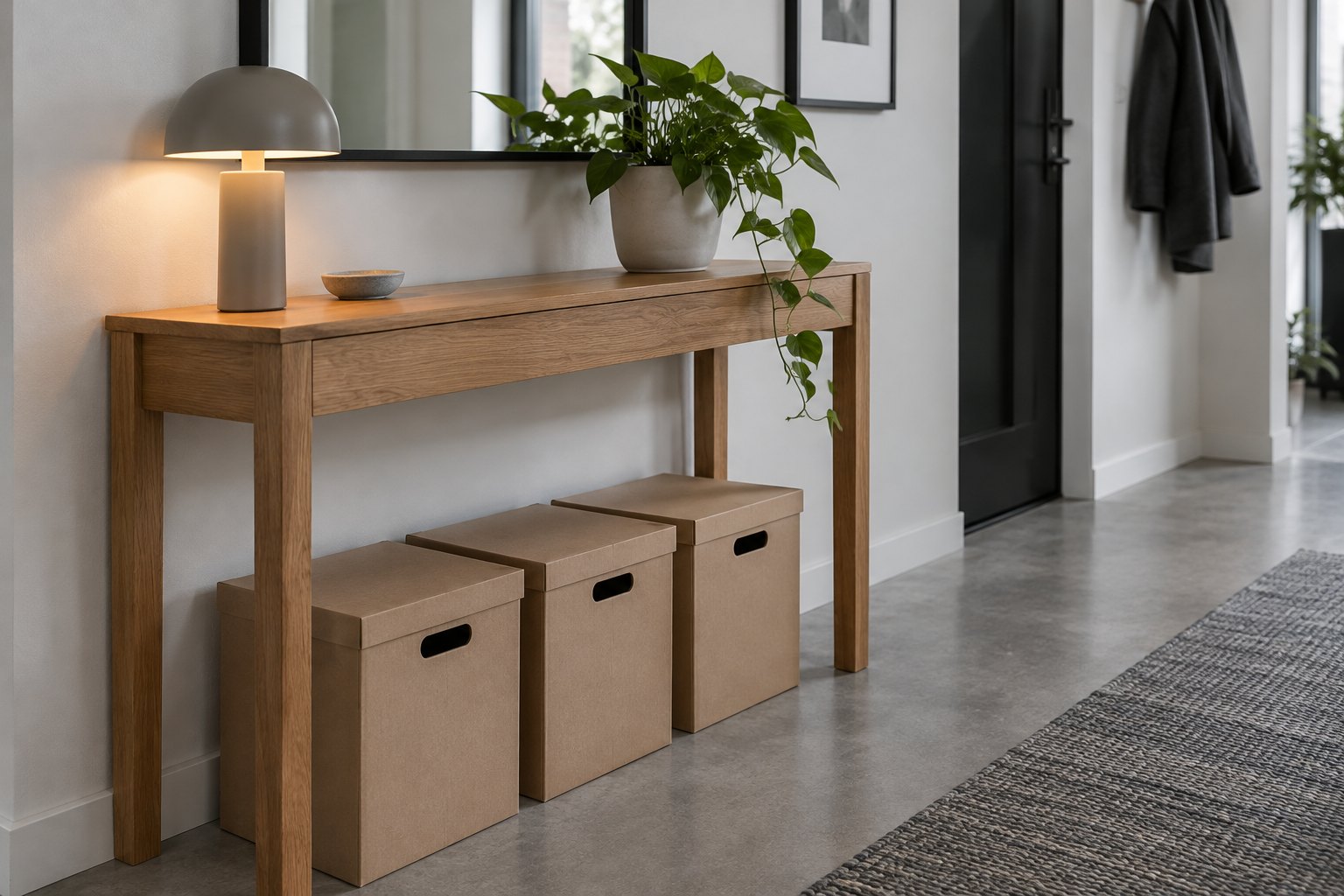
The station can be a narrow shelf, a small wall-mounted surface, a tray, or even a dedicated section of an existing console.
The important part is not the furniture. It is the rule: daily items have a visible, predictable destination.
Use the Wall Before Using More Floor Space
When floor space is limited, the wall becomes your most useful storage surface.
Hooks can hold coats and bags. A shallow shelf can handle keys and small accessories. A narrow rail can keep frequently used items off the floor. Small baskets can group items that would otherwise scatter across a console.
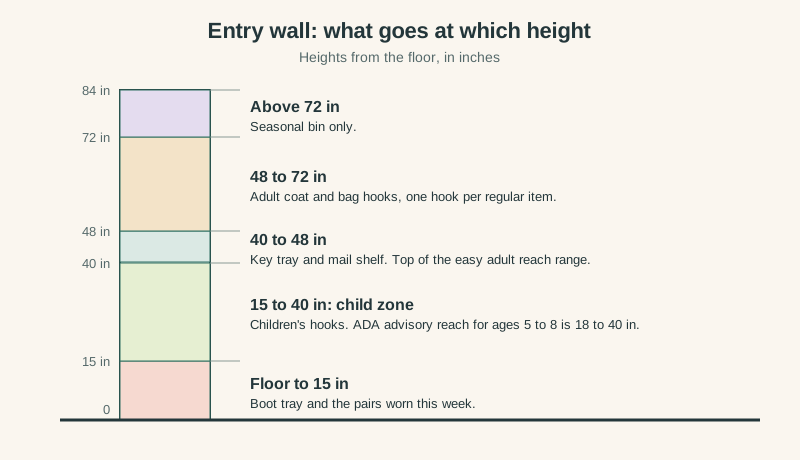
Keep frequently used items at an easy-to-reach height. The ADA Standards give 15 to 48 inches as the unobstructed reach range for operable parts, a sensible band for the key tray and mail shelf, and the ADA’s advisory ranges for children (18 to 40 inches for ages 5 to 8) are a good guide for a child’s hook. Put occasional items higher or move them to another storage area entirely.
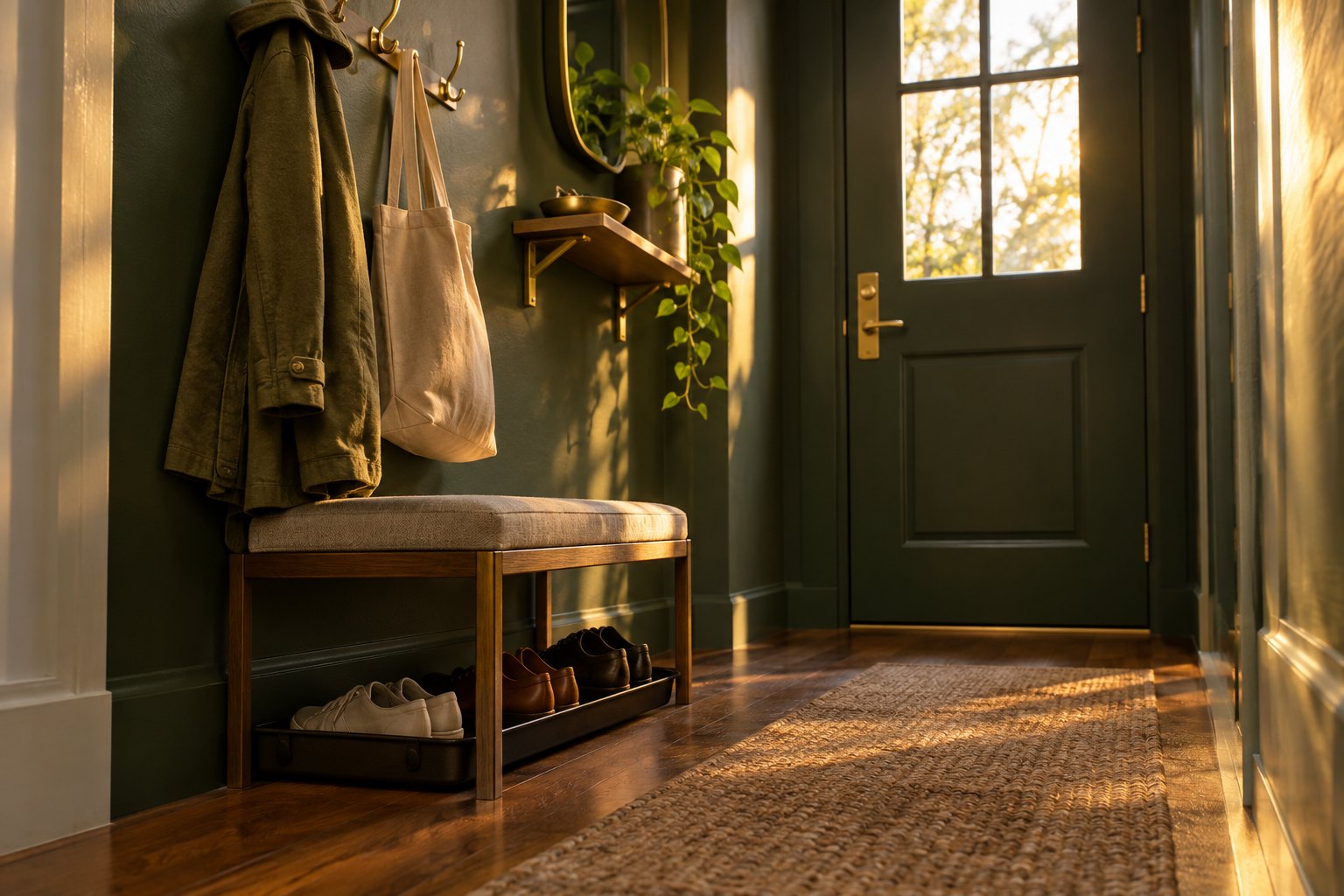
Here is what those principles look like in a real-feeling room: a shallow wall shelf for baskets, a hook rail on the door, a slim shoe rack with one basket for overflow, and a mirror that makes the entrance feel less closed in. Nothing here sticks out far enough to block the walking path.
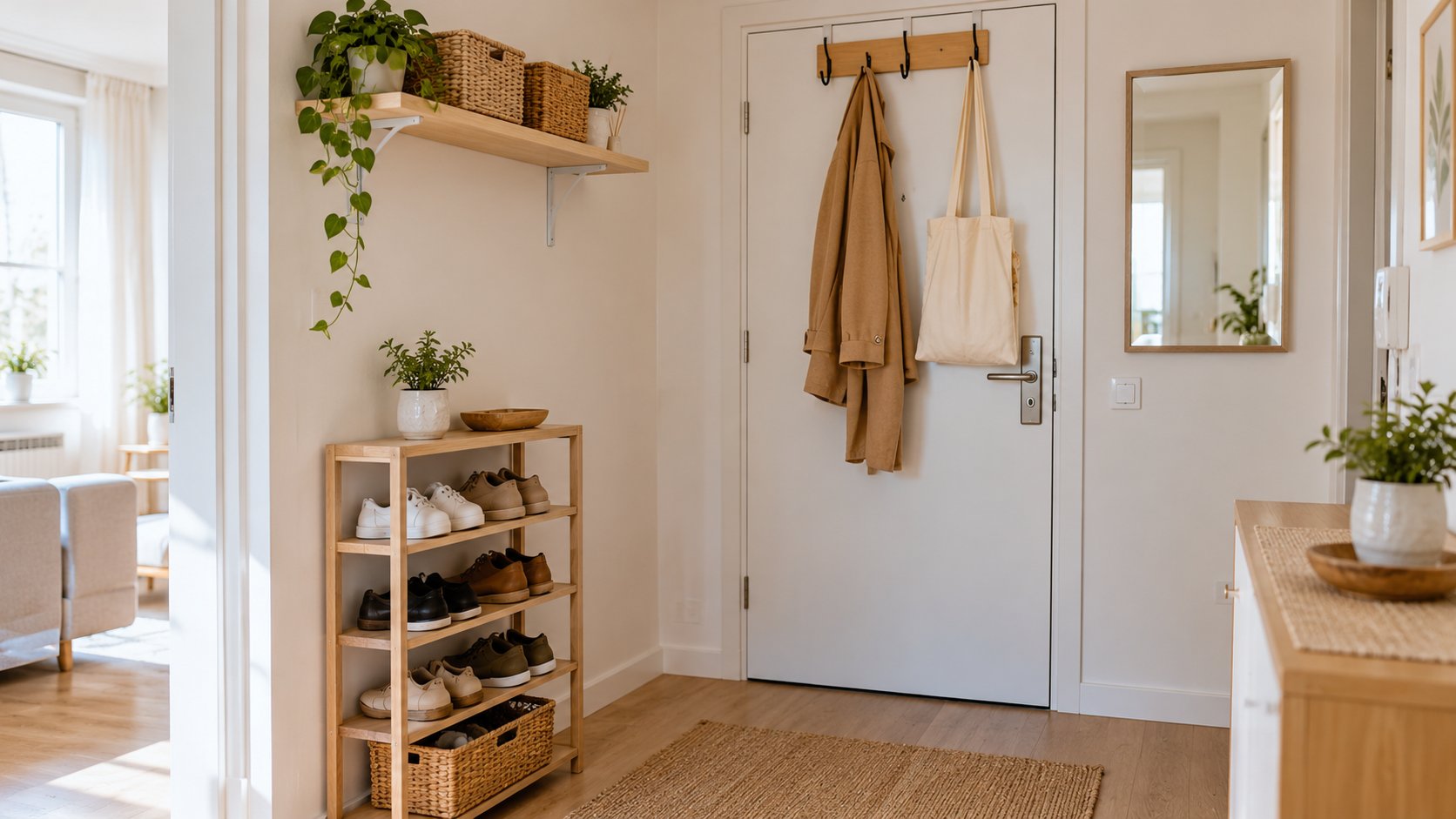
Illustrative example of a wall-focused entryway setup (AI-generated image).
If you rent, choose solutions that match your lease and the manufacturer’s installation requirements. Adhesive hooks, removable systems, and freestanding options can sometimes reduce permanent changes, but every product has its own weight limits and surface requirements.
For more renter-friendly ideas, see our guide to renter-friendly closet organization .
Give Shoes a Defined Footprint
Shoes are often the first thing that makes a small entrance feel chaotic. The problem is rarely that there are no possible storage solutions. It is that there is no boundary around the collection.
Choose a defined footprint: one shelf, one narrow rack, one basket, or one section of the closet. Then decide which shoes actually need to live near the door.
A useful seasonal approach is to keep the pairs you currently wear most often at the entrance and store less-used pairs elsewhere. This keeps the entryway working as a transition space rather than turning it into a permanent shoe warehouse.
If several people share the entrance, assign each person a small, visible zone. Clear limits make it easier to notice when the system is full.
Make Bags and Coats Easy to Put Away
A storage system fails when the final action takes too many steps.
If a bag has to be carried through the hallway to reach its hook, it will probably end up on a chair. If a coat requires opening a crowded closet door, it may stay on a hook for days.
Place the most frequently used items at the point where you naturally stop. Use one hook per regular bag or coat where possible, and avoid filling every available hook.
Leave a little visual and physical space between items. An entryway can technically hold many things while still feeling unusable. The purpose of organization is not to achieve maximum density; it is to make the next action obvious.
Keep Mail and Small Items From Becoming Permanent Clutter
Paper and tiny objects are especially good at creating visual noise.
Instead of creating a large “miscellaneous” basket, use a simple decision rule. Mail should be either actionable, recyclable, or ready to file. Keys should have one home. Receipts should not become a permanent pile.
A small tray can work well for daily pocket items, but it should have a capacity limit. When the tray is full, that is a signal to process its contents rather than adding another container.
This is where a small entryway can become more useful than a large one: limited space forces the system to stay selective.
Separate Daily Storage From Reserve Storage
One of the easiest ways to overload an entryway is to store things there simply because they might be useful someday.
Ask of every item: “Do I need this between leaving and returning home?”
If the answer is no, consider moving it to a closet, bedroom, utility area, or another appropriate storage zone.
Reserve storage should support the entryway, not compete with it. Seasonal accessories, backup supplies, special-event shoes, and rarely used bags usually do not need prime entrance real estate.
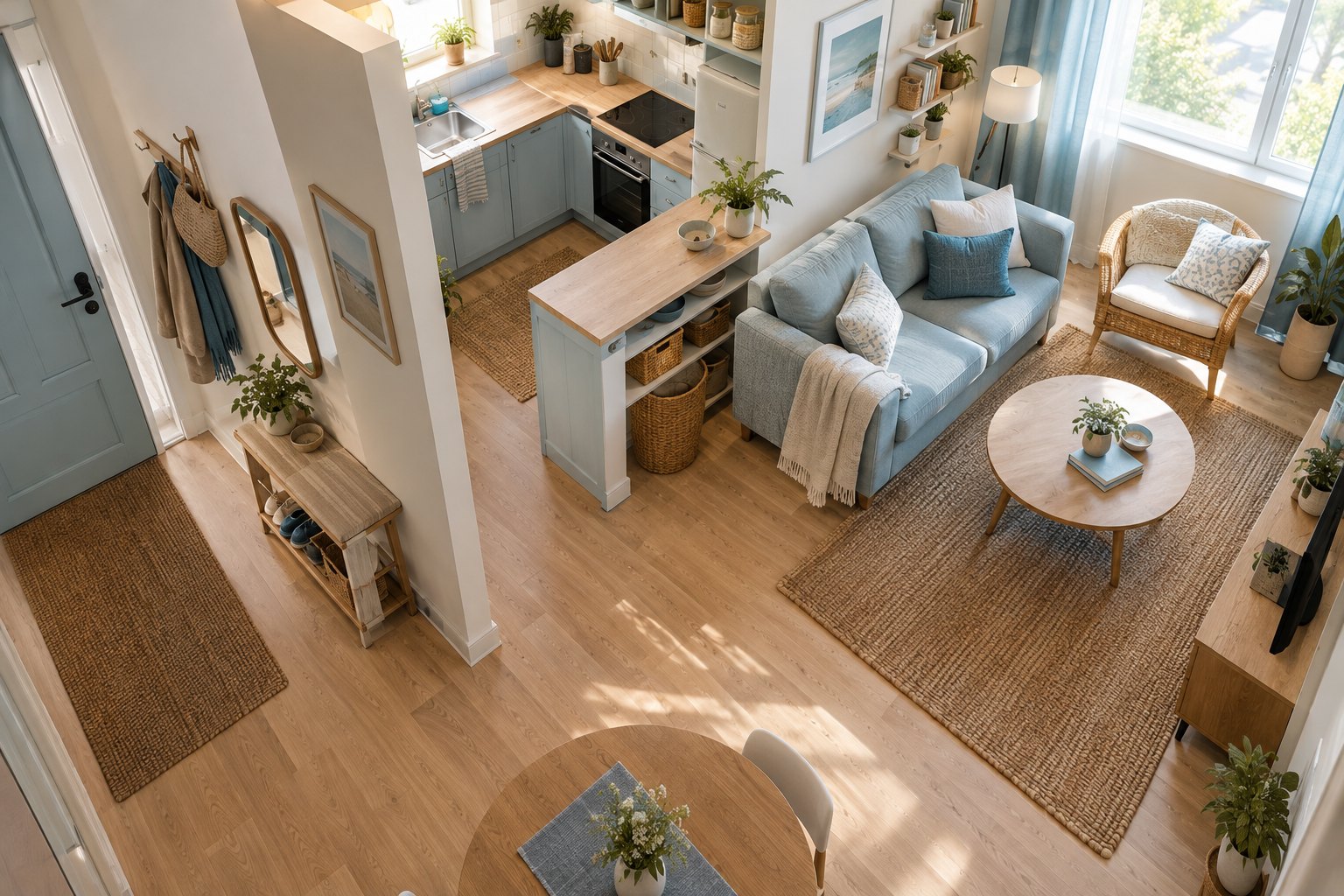
If your home has very little storage overall, our small-apartment storage ideas can help you look for capacity in other rooms before adding more to the entrance.
Build a Reset That Takes About 15 Minutes
A system becomes sustainable when the maintenance is small enough to repeat.
Try a simple reset:
- 5 minutes: collect shoes, bags, mail, and loose objects.
- 5 minutes: sort anything that needs a decision.
- 5 minutes: return items to their permanent homes.
You do not have to perform this routine at a fixed time. Use the moment that naturally fits your household, such as before bed or after the evening rush.
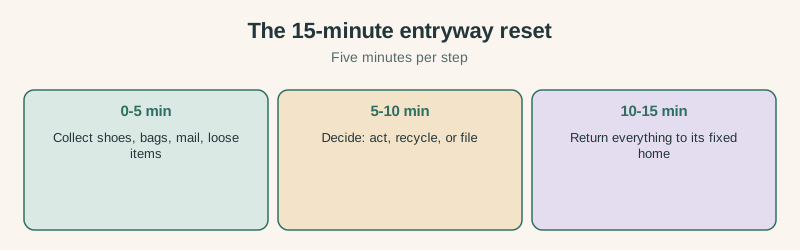
The objective is not perfection. The objective is to prevent a five-minute mess from becoming a one-hour weekend project.
Fix the First Point Where Clutter Appears
If the same item keeps appearing in the wrong place, do not simply put it away again. Ask why the current system is failing.
Maybe the hook is too high. Maybe the tray is too far from the door. Maybe the shoe shelf is too small. Maybe the item belongs in another room altogether.
This is the most important feedback loop in home organization: repeated clutter is information.
Change the system at the point where the behavior happens. A good setup should reduce the number of decisions required, not require constant self-discipline.
Keep the Entryway Small, Clear, and Honest
The best narrow-entryway system is not the one with the most storage. It is the one that accurately reflects what your household needs at the door.
Measure first. Create one drop zone. Use vertical space. Give shoes a boundary. Keep daily items close and reserve items elsewhere. Then maintain the system with a short reset.
If you follow those principles, even a narrow entrance can become a useful transition point instead of a place where clutter stops moving.
The test is simple: when you come home tomorrow, can you put everything down in the right place without thinking about it?
If yes, the organization is doing its job. If not, watch what happens for three or four days before buying anything else. The repeated location of the clutter tells you which part of the system needs to move, shrink, or disappear.
For households with several people, keep the rules visible rather than relying on memory. One hook can represent one regular coat or bag; one basket can represent one category; one shelf can define the maximum number of shoes allowed at the entrance. These physical limits make the system easier for children and adults to follow because the correct action is obvious.
Also check the entrance after cleaning or grocery trips. Temporary bags and packages are common sources of overflow because they arrive when the normal routine is interrupted. Give them a temporary holding rule: process them immediately, or move them to a clearly defined staging area that is not the permanent drop zone.
A narrow entryway should feel like a short transition, not a storage room. When the system is simple enough to reset in minutes, the limited floor area becomes an advantage rather than a constant battle.
Frequently Asked Questions
How do I organize a very narrow entryway?
Start with a small drop zone for daily items, use the wall for vertical storage, give shoes a fixed footprint, and keep occasional items outside the entrance area.
How much storage should a small entryway have?
Use only enough storage for the items that regularly arrive and leave with you. A compact system is easier to maintain when it does not become a second closet.
What should go in an entryway drop zone?
Keep the drop zone focused on daily-use items such as keys, a bag, mail that needs action, and the shoes or outer layer you are currently using.
How can I keep an entryway organized long term?
Use a short reset routine, return each item to a defined location, and remove things that repeatedly accumulate without being used.
What is the ideal depth for narrow entryway storage?
Choose storage shallow enough to preserve a comfortable walking path; measure the actual passage and door swing before selecting a cabinet, bench, or shelf.
Can I install storage in a narrow entryway if I rent?
Often yes, using freestanding or removable systems where appropriate, but check your lease, surface requirements, and each product’s installation and weight limits first.
Related Small-Space Guides
A narrow entrance works better when overflow is stored elsewhere. Look for spare capacity with our small apartment storage guide , find a second home for shoes and seasonal bags with the small bedroom storage guide , or see renter-friendly closet organization , linen closet organization , small bathroom organization and small laundry room organization .
Sources
- NKBA Kitchen Planning Guidelines (PDF) : the 36 inch minimum walkway width, borrowed here as a practical minimum for an entry path.
- Access Board: ADA Standards guide, Chapter 3 Operable Parts : the 15 to 48 inch adult reach range and the advisory children’s reach ranges.
- NFPA: Escape planning : planning two ways out of each room.
The diagrams are original illustrations made for this guide; the 12 inch strip is a planning example, not a code requirement.
Image Credits
- Cover: AI-generated image via ChatGPT, October 2026.
- In-article entryway photo: AI-generated image via ChatGPT, October 2026.